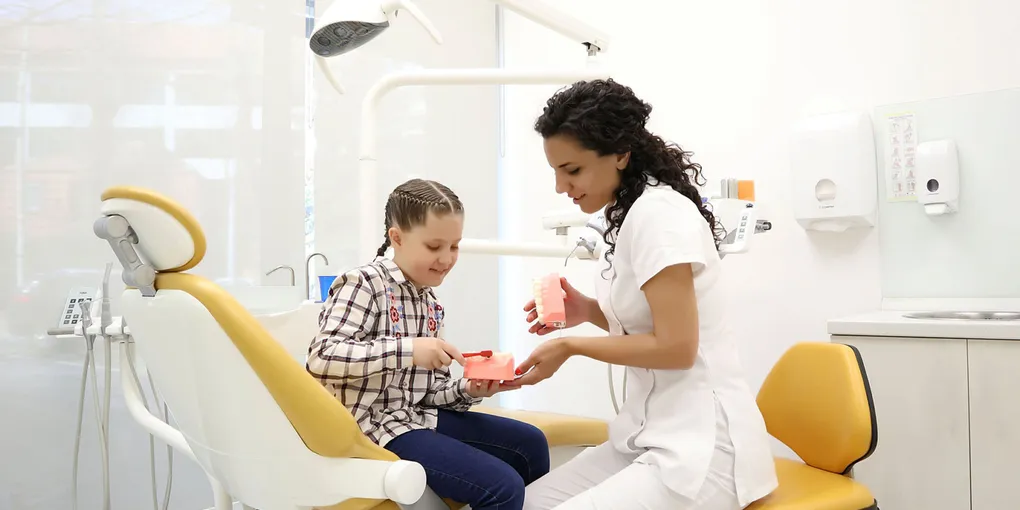
Do you remember your first trip to the dentist? Plenty of us do, and not always fondly. Your child gets the chance to start off far more relaxed: wander in curious, climb into a chair that moves, show off a few teeth and head home happy.
A first dentist visit really isn’t a big deal, but it is a lovely start. Here’s when to go, how to get ready and what actually happens.
When to take your child to the dentist for the first time
Earlier than most parents think! The European Academy of Paediatric Dentistry suggests going when the first tooth comes through, and by the first birthday at the latest. That first tooth usually turns up at around six months.
Parents often put off a visit until their child says something hurts, or until all the baby teeth are through. But decay in baby teeth can progress quickly without the child feeling anything, so it’s better to come while there are no problems at all. That way, your child remembers their first meeting with the dentist as something pleasant.
Your child is already two, three or five and still hasn’t seen a dentist? Don’t worry, it’s still the right time for a first check-up. Book it as soon as you can, even if your child has no problems at all.
There are a few things that shouldn’t wait for a routine visit, so get in touch straight away if you notice:
- dark or white spots on the teeth
- pain, swelling or bleeding gums
- your child avoiding chewing on one side
- an injury to the teeth or mouth after a fall
How to prepare your child for the first visit
Preparation is simple. What matters is how you talk about the dentist in front of your child, and a few small things will help too.
Pick a time of day when your child is rested and fed. For babies and toddlers, that’s usually after a nap. A hungry, sleepy patient doesn’t enjoy anything much.
Mention the visit casually, like anything else you’re doing that week. It’s enough to say the dentist will have a look at their teeth and count them. Phrases like “it won’t hurt” or “don’t be scared” sound comforting, but they put ideas in a child’s head that weren’t there before. The same goes for “if you don’t brush, you’ll have to go to the dentist”, which makes a check-up sound like a punishment.
Play dentists at home! Let your child count your teeth, or a favourite teddy’s, and then count theirs. After that, opening wide at the practice is just a game they already know.
One more thing: children are very good at sensing when we’re nervous. If you’re a little afraid of the dentist yourself, which is entirely human, try to keep that as your little secret.
Before you set off, jot down any questions that come to mind. No question is a silly one.
What to expect at the first visit
First we have a chat about what your child likes to eat, how brushing goes at home and any habits they have. Meanwhile your little one can settle in, look around and get to know the dentist. Instruments get child-friendly explanations.
The check-up itself is short and goes like this:
- Teeth and gums – we see how the teeth are coming through and look for any signs of decay.
- Bite and jaws – we check how everything is developing.
- Habits – we talk about thumb sucking, dummies, bottles and mouth breathing.
- Tips for you – you get brushing and diet advice suited to your child’s age.
Babies and one- to two-year-olds are usually examined on a parent’s lap. Older children often like to sit by themselves, and a chair that goes up and down can be the highlight of the day.
If something needs treating, it’s normally left for another day, unless your child is in pain. The main thing at a first visit is that your child feels good and wants to come back. You can read more about how we work with our youngest patients on our paediatric dentistry page.
Why baby teeth matter
“They’re only baby teeth, they’ll fall out anyway.” You hear this a lot, but it isn’t quite right. Baby teeth help children chew and speak properly, and they save a place for the permanent teeth growing underneath.
Untreated decay can bring pain, infection and sleepless nights. And if a baby tooth leaves too early, its neighbours can drift into a spot that isn’t theirs, which may later call for orthodontic treatment.
Healthy teeth start at home
What happens in your bathroom every evening counts for more than any check-up. Here’s a quick reminder by age:
| Age | Brushing | Amount of fluoride toothpaste |
|---|---|---|
| First tooth to 3 years | A parent brushes twice a day with a soft brush | A grain of rice |
| 3 to 6 years | The child brushes, then a parent finishes | A pea-sized amount |
| 6 to at least 7 years | The child brushes, and a parent checks | A pea-sized amount |
And a few small things that make a big difference:
- Avoid settling your child to sleep with a bottle of milk, juice or sweetened tea.
- Give sweets and sugary drinks with a meal, not as a snack between meals.
- Water is always a good choice between meals and before bed.
- Once teeth are brushed in the evening, it’s water only.
- Keep your child’s spoon and dummy out of your own mouth, as this passes on the bacteria that cause decay.
When the first permanent molars arrive, at around age six, think about fissure sealing, a painless procedure that protects the chewing surfaces from decay. And if you’re curious what’s really going on between brushes, have a read about dental plaque.
See you at the first check-up
With an early visit, relaxed preparation and good habits at home, going to the dentist becomes something completely ordinary. Maybe even a little outing.
Ordinacija Ružić is in Zemun, Belgrade. You can book using our booking form or by calling +381 (64) 19 83 674, and our fees are in the price list. We look forward to your visit!
FAQ
When should a child first see a dentist?
A first visit is recommended when the first tooth comes through, and by the first birthday at the latest. If that time has already passed, book a visit now. It is never too late to start.
Is a child's first dental visit painful?
No. The first visit is a short conversation and a careful look at the teeth and gums, with no drilling or anaesthetic. If the dentist finds a problem, treatment is normally arranged for another appointment.
How long does a first visit to a children's dentist take?
Usually between 15 and 30 minutes, depending on the child's age and mood. With young children, it matters more that the experience is pleasant than that the examination is finished at all costs.
What if my child cries or refuses to open their mouth?
This is completely normal in young children. The examination is not forced. The child is given time to get to know the practice, and the next visit is booked for when they are more ready.
Why treat baby teeth if they will fall out anyway?
Baby teeth are needed for chewing and speech, and they hold the space for permanent teeth. Untreated decay can cause pain and infection, and losing a baby tooth early can disrupt how permanent teeth come through.
How often should a child have a dental check-up?
A check-up every six months suits most children. Your dentist will tell you if your child needs to come more often.